cat litter ammonia: why it happens and how daily scooping helps
Bacteria break down urea in urine, giving the ammonia-like smell, so it builds as urine sits. Remove clumps daily and keep one more box than cats before buying anything. Follow your bag's fill depth. If the smell changes suddenly or box habits change, call your vet.
Cat litter ammonia is the sharp smell some owners notice when they lean over the box. This guide covers the routine checks worth making, how some makers word ammonia-related claims, and when the smell is a reason to call your vet instead of buying another product.
Affiliate disclosure: if you buy through this link, we may earn a commission.
Why litter can smell like ammonia
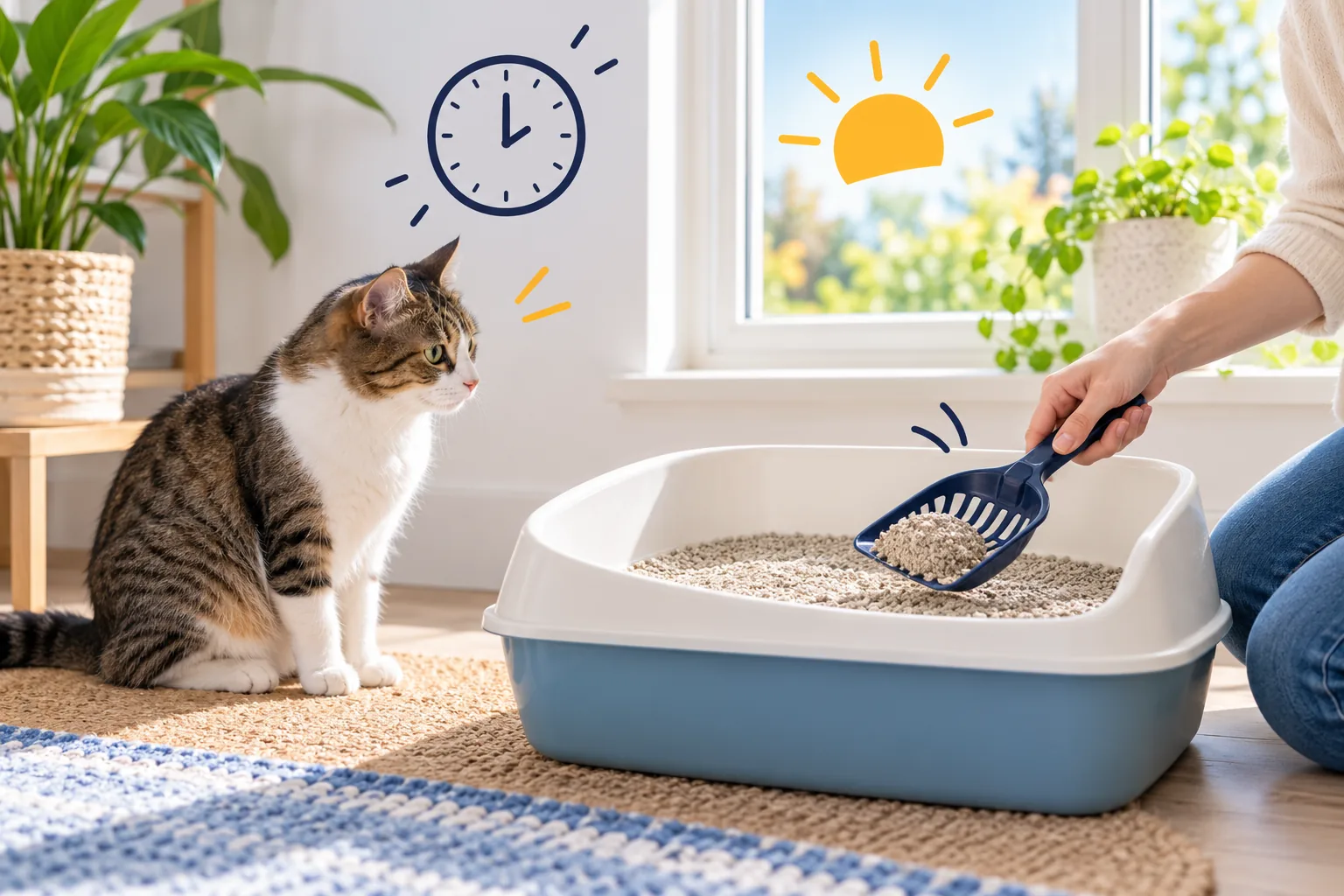
McGill University's Joe Schwarcz, PhD, explains that bacteria decompose the urea in urine over time, giving the ammonia-like smell characteristic of stale urine. So the smell builds as urine sits, which is why Cornell's advice to remove clumps daily matters.
Cornell, in guidance dated January 2015, advises daily removal of clumps and feces and one more box than the number of cats. Check those two first. The cat box odor control guide takes them step by step.
Everyday steps to manage it
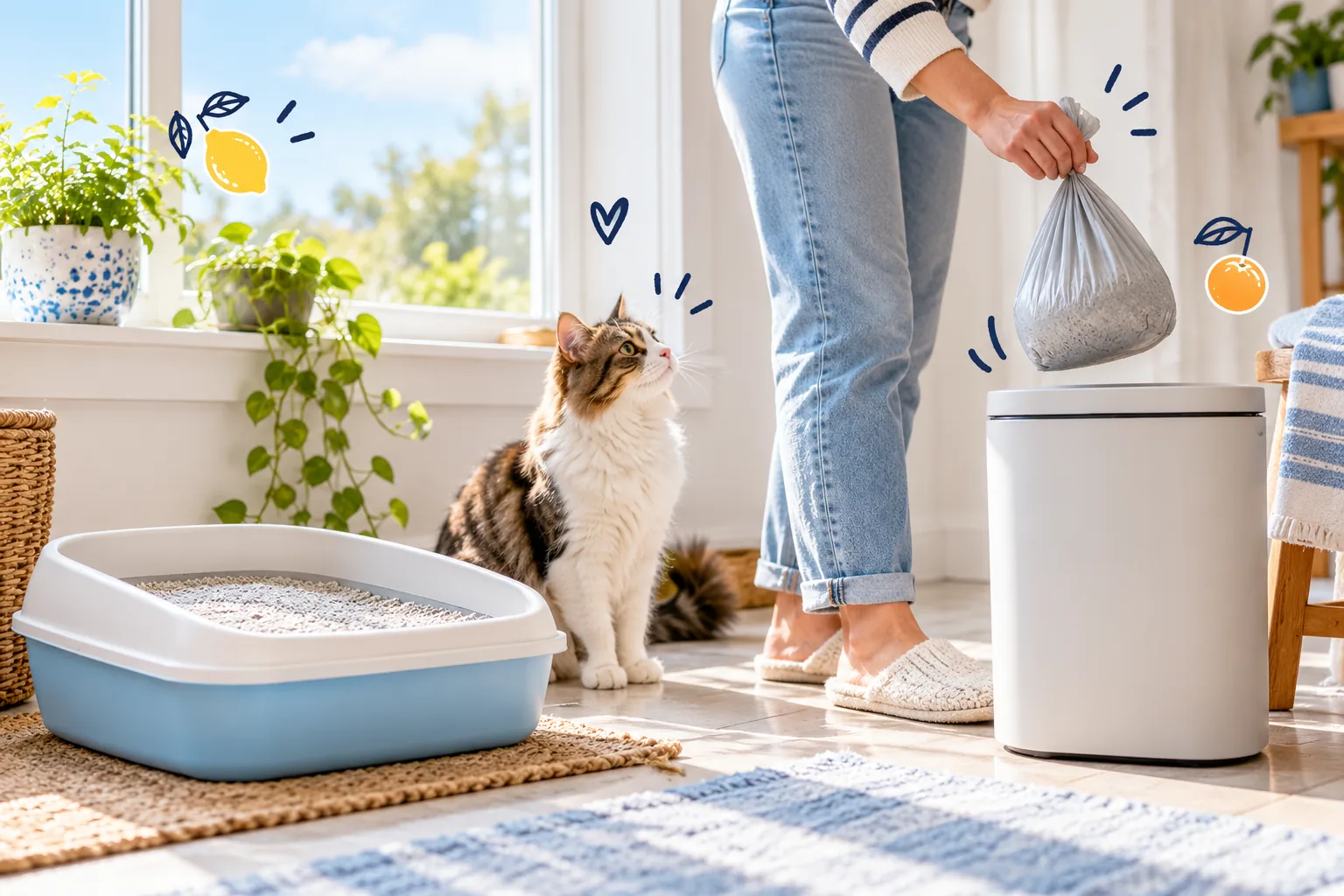
Work through these in order before you buy anything new.
Makers' directions differ. Fresh Step directs daily removal of solids and clumps and a fill of 3 to 4 inches. Dr. Elsey's Ultra Litter directs scooping twice daily. World's Best directs daily scooping and 2 to 3 inches. Follow the bag you own.
- Remove clumps and feces daily, as Cornell advises.
- Count your boxes: one more than the number of cats.
- Check your bag for the maker's fill depth.
- Note any change in the smell after each step.
Litter and add-in choices
Fresh Step names ammonia in a product feature. It describes Simply Unscented clumping clay litter as having enhanced carbon and Ammonia Block Technology, with no added fragrances or dyes. Tidy Cats describes Free & Clean Unscented as containing activated charcoal. These are the makers' own descriptions of what is inside.
Add-ins list their contents too. Arm & Hammer's deodorizer powder lists sodium bicarbonate as the deodorizer and also lists fragrance. Cornell says most cats prefer unscented litter, so read that line first. Fresh Step's Simply Unscented page describes a fragrance-free experience, but scent wording differs from maker to maker, so read each label in full.
Purrify is activated carbon granules in bags. The maker describes it as the most powerful odor remover in the world. That is the maker's statement, not a measured ammonia result. We suggest the 120g bag for most homes.
When to talk to a vet
A page cannot diagnose a smell. Cornell recommends a veterinary examination to look for underlying causes of house soiling.
Call your vet if the smell changes suddenly, if your cat's box habits change, or if you are unsure. No litter or add-in replaces that call.
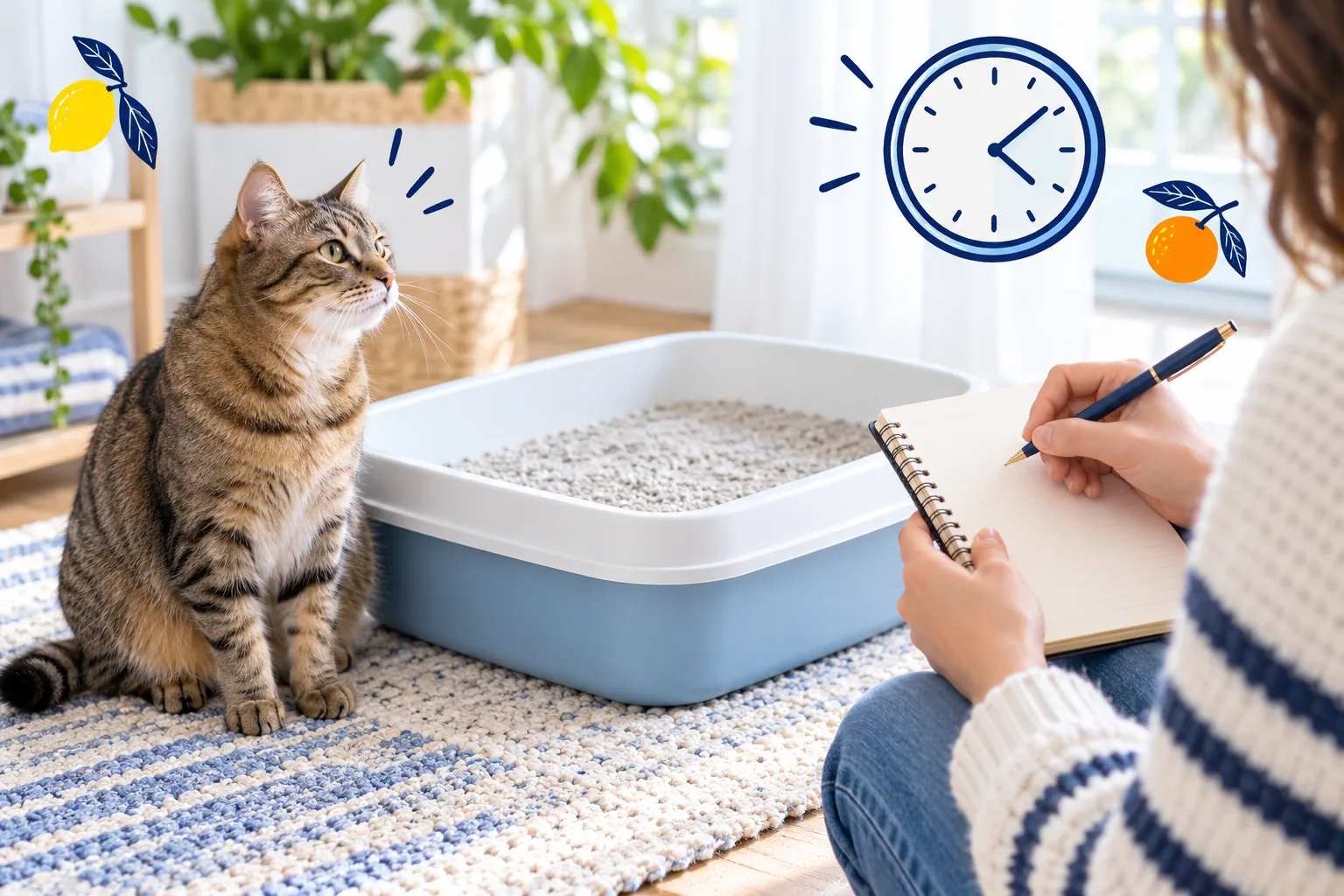
Bring notes. Write down when the smell changed, which litter you use and how often you scoop, so your vet has the facts.
Quick questions
What do makers say is in litter that targets ammonia?
Fresh Step describes Simply Unscented as having enhanced carbon and Ammonia Block Technology, no added fragrances or dyes. Tidy Cats describes Free & Clean as containing activated charcoal. These are makers' descriptions of contents, not results.
What should I bring to the vet?
Bring notes: when the smell changed, which litter you use and how often you scoop, so your vet has the facts.
Sources
- McGill University: why does cat urine smell so bad and what can I do about it
- Cornell Feline Health Center: feline behavior problems, house soiling (page updated January 2015)
- Fresh Step: Simply Unscented litter
- Dr. Elsey's: Ultra Litter
- World's Best Cat Litter: Multiple Cat Unscented
- Tidy Cats: Free & Clean Unscented clumping litter
- Church & Dwight ingredient disclosure: Arm & Hammer Cat Litter Deodorizer Powder
- Purrify maker products page
Affiliate disclosure: if you buy through this link, we may earn a commission.