cat box odor control: a practical setup guide
Start with habits: Cornell advises removing clumps and feces daily, and keeping one more box than cats. Check your litter's own scoop directions. Add one product at a time and watch how your cat acts around the box. If the smell changes suddenly or your cat stops using the box, call your vet.
Cat box odor control is a short list of decisions: how you scoop, which boxes you set out, which litter you pour and what you add. This guide takes them in order, using published care guidance and maker directions.
Affiliate disclosure: this site may earn a commission if you buy through this link.
Start with scooping and cleaning habits
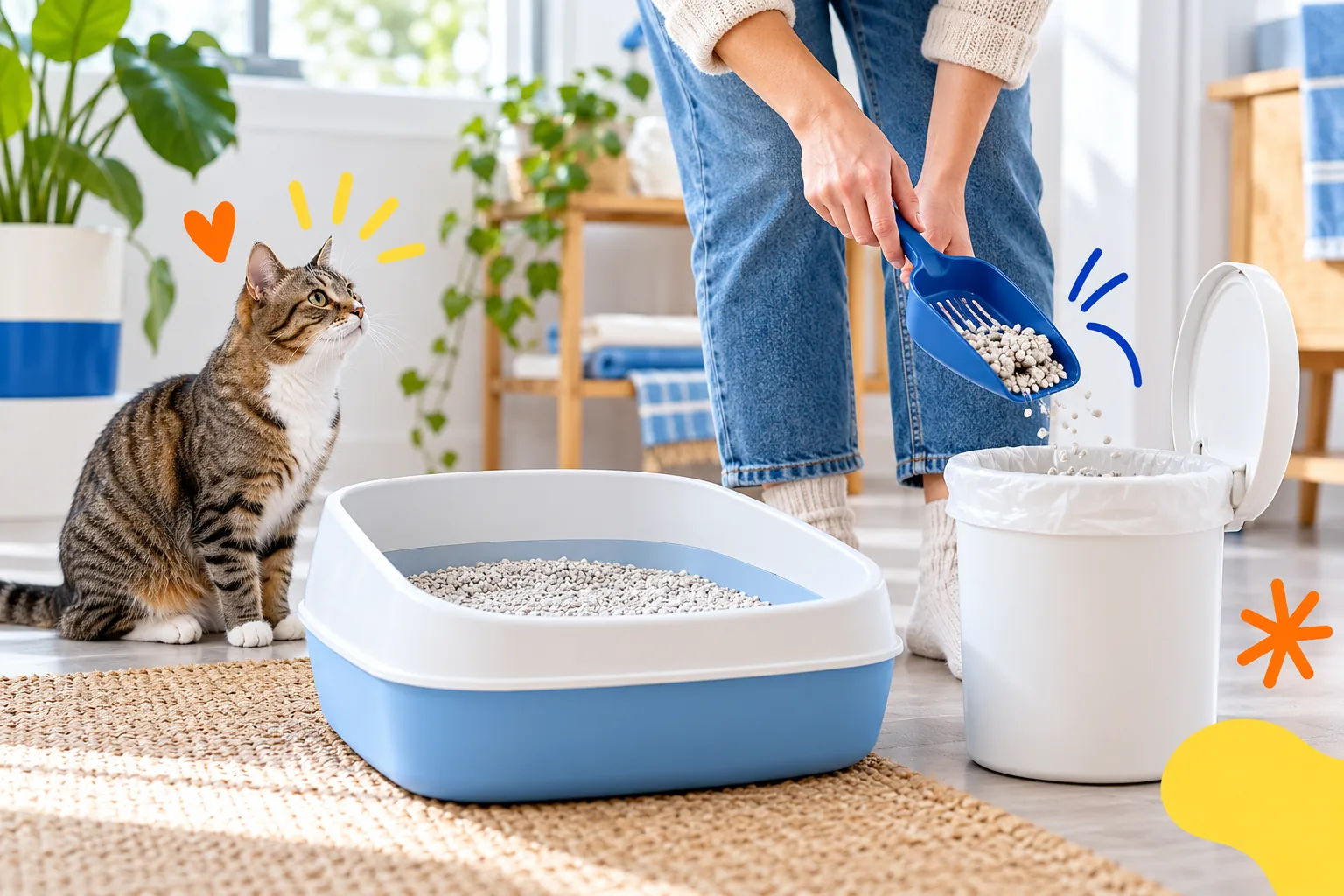
Cornell Feline Health Center advises removing clumps and feces daily, in a page updated January 2015. Maker directions vary by litter: Dr. Elsey's says to scoop twice daily, and Fresh Step and World's Best say daily. If the smell is sharp, the cat litter ammonia guide explains why urine odor builds as it sits.
Used litter has its own rule. Fresh Step and Dr. Elsey's both say to use the trash, not the toilet. The ASPCA advises washing the box weekly with warm water and unscented soap. Check the box maker's page for any model-specific cleaning directions.
- Set a daily scoop time you can keep.
- Check your litter's page for its scoop frequency.
- Bin used litter unless the maker says otherwise.
Box size, number and placement
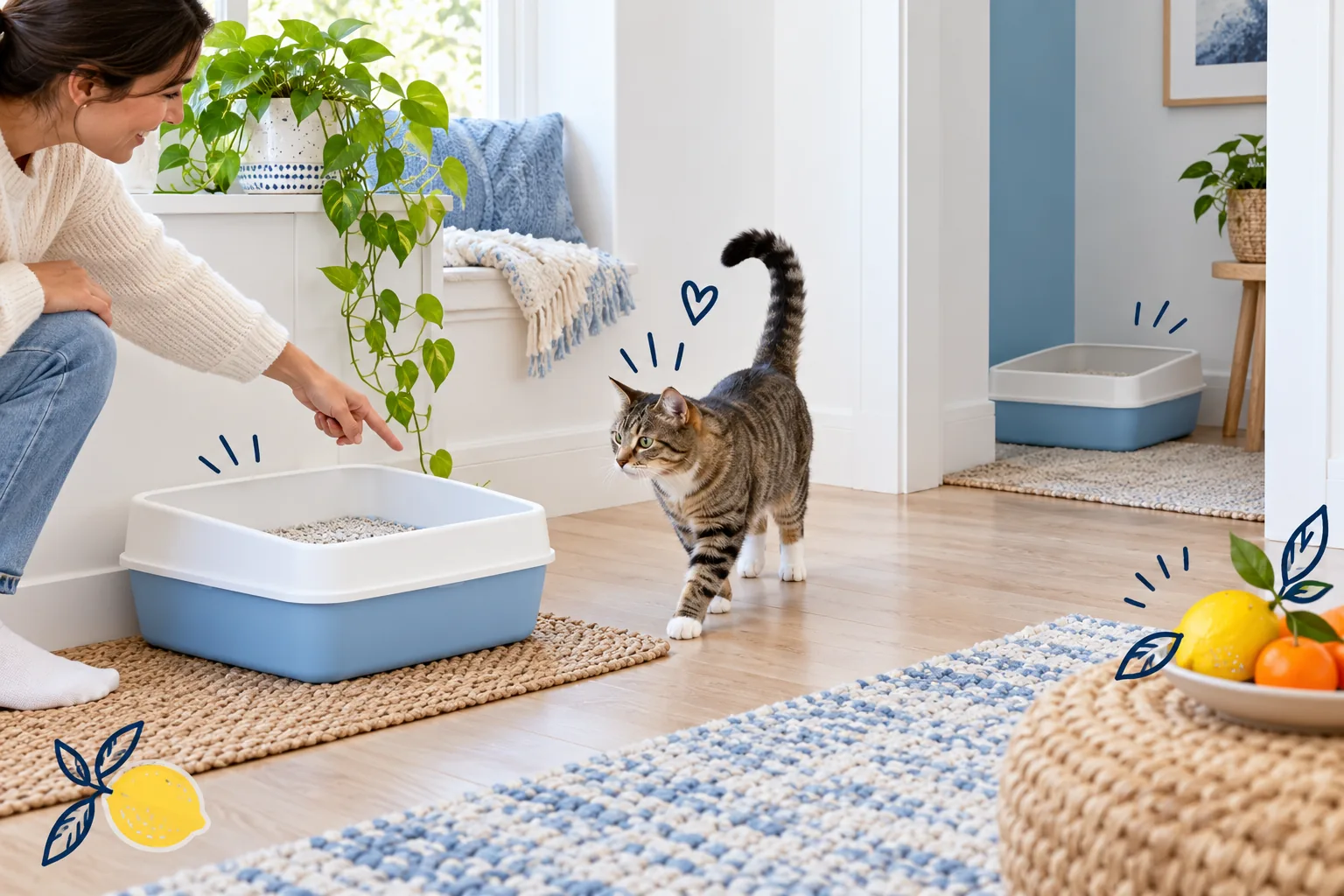
Cornell's guidance advises one more box than the number of cats, so two cats call for three boxes. It says most cats prefer uncovered boxes, and suggests low-sided boxes for kittens, seniors and cats with mobility problems. That is general guidance, not advice for your individual cat.
The ASPCA advises quiet, accessible spots away from loud, high-traffic areas and places where a cat might feel trapped. Then test the fit: can your cat step in and turn around easily? Can your cat reach the box at any hour? Can you scoop it without moving furniture?
Litter and add-in choices
Cornell's page says most cats prefer unscented, finer-textured litter. Use that as a starting point, then read the odor control cat litter page for materials.
Arm & Hammer says to add its powder straight to any type of litter. For Purrify, we suggest the 120g granule bag for most homes. Add one product at a time and watch how your cat acts around the box. If your cat starts avoiding it, undo the change and ask your vet.
Keep the setup simple. One litter and one add-in are easier to judge than four products at once.

When odor points to something else
A strong or changed smell is a reason to look beyond the litter. If your cat has started going outside the box, Cornell's guidance recommends a veterinary examination to look for underlying causes of house soiling.
If the smell changes suddenly, book a vet visit and describe what changed. Keep daily scooping going while you wait.
- Note the date the smell or box habits changed.
- List anything new: litter, add-in, box or location.
- Share that list with your vet.
Quick questions
Where should the box go?
The ASPCA advises quiet, accessible spots away from loud, high-traffic areas and places where a cat might feel trapped. Check your cat can step in and turn around easily and you can scoop without moving furniture.
How do I handle used litter and wash the box?
Fresh Step and Dr. Elsey's both say to use the trash, not the toilet. The ASPCA advises washing the box weekly with warm water and unscented soap.
Sources
- Cornell Feline Health Center, house soiling guidance (page updated January 2015)
- ASPCA: litter box problems
- Dr. Elsey's Ultra Litter page (maker)
- Fresh Step Simply Unscented litter page (maker)
- World's Best Cat Litter, Multiple Cat Unscented page (maker)
- Arm & Hammer Cat Litter Deodorizer Powder product page (maker)
- Purrify products (maker)
Affiliate disclosure: this site may earn a commission if you buy through this link.