litter box deodorizer for kittens: box setup and questions for your vet
Ask your vet before adding any deodorizer; no product page can confirm one is safe for a particular kitten. Cornell suggests low-sided boxes for kittens. Bring the label and say what litter your kitten used before, change one thing at a time, and call your vet if your kitten stops using the box.
Litter box deodorizer for kittens comes down to the box and the litter before any additive. This guide covers a low-sided box, quiet placement and daily scooping, the main deodorizer types, and questions for your vet, because no product page can confirm a product is safe for a particular kitten.
Affiliate disclosure: we may earn a commission if you buy through this link.
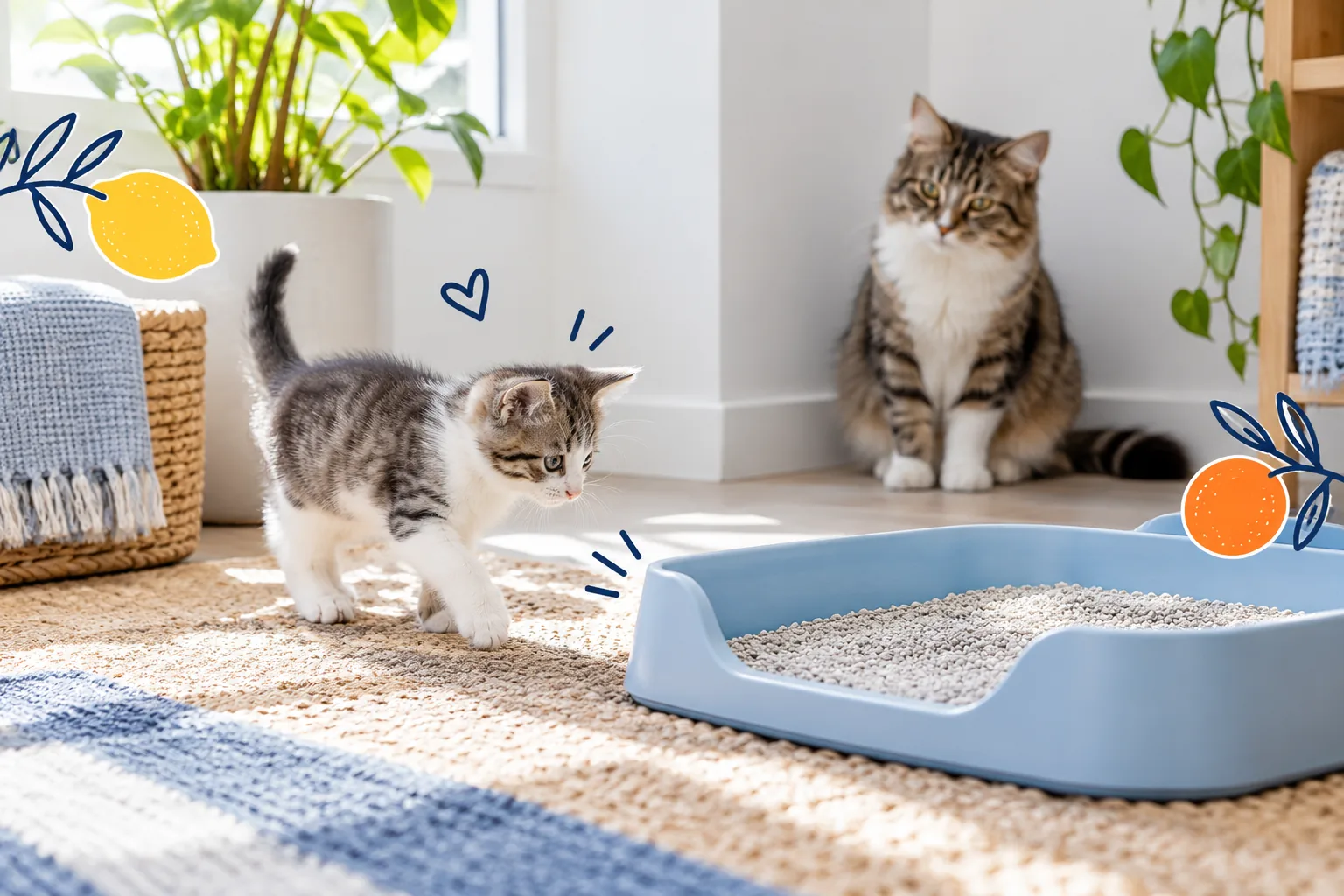
Is a litter box deodorizer safe for my kitten?
Only your vet can judge what suits a particular kitten, who is small, curious and still growing. An ingredient list shows what is in a product, not whether it suits a kitten, so no additive, spray or device is called safe or unsafe for kittens here. Ask your vet before adding any product.
Cornell's Feline Health Center, on a page updated January 2015, recommends a veterinary exam to look for underlying causes of house soiling, so tell your vet if a kitten keeps missing the box.
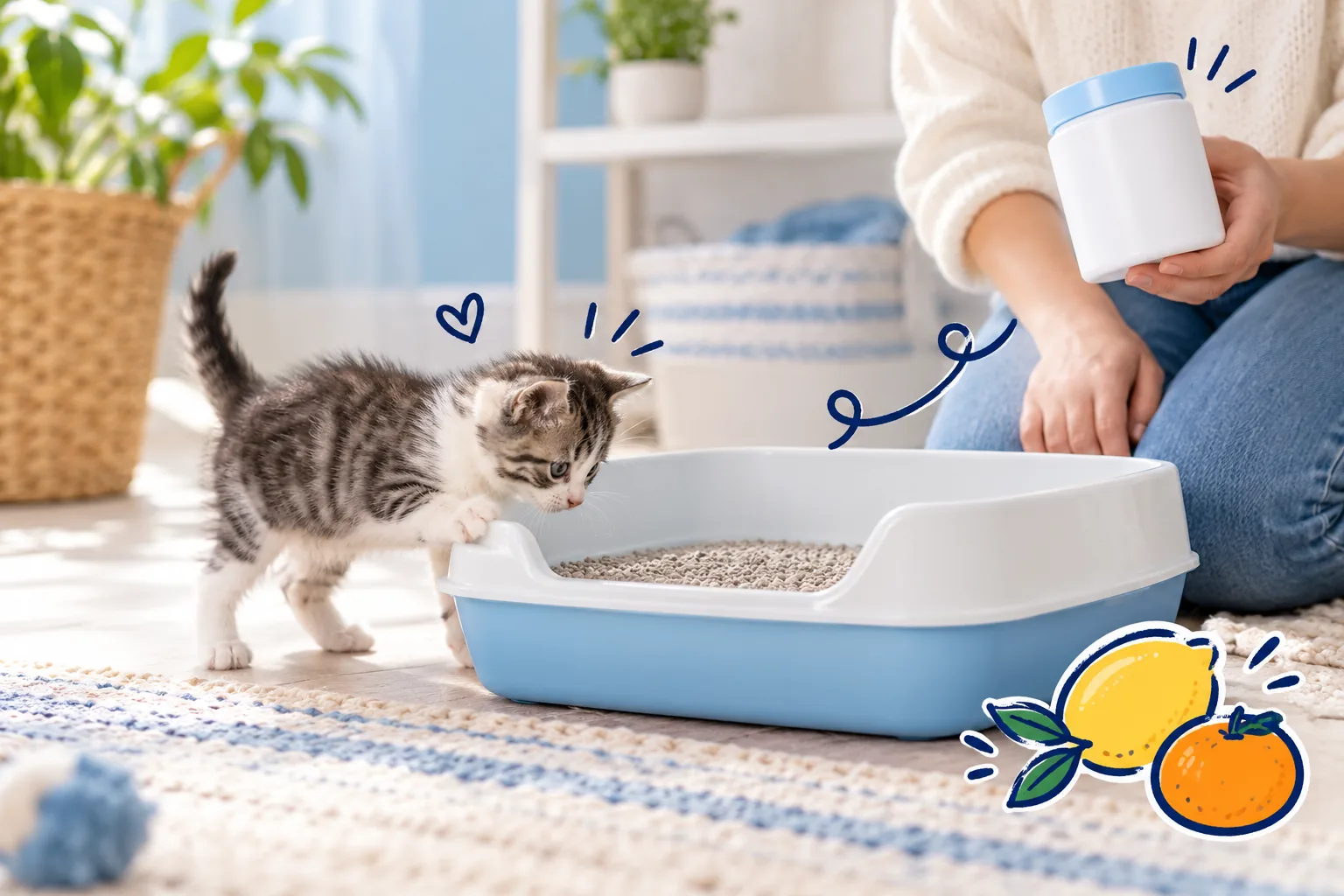
Types of deodorizer in general
Products sort by how they are used. Arm & Hammer's disclosure lists sodium bicarbonate and fragrance for its powder. Rocco & Roxie lists corncob pieces with an essential oil-based fragrance. Purrify is activated carbon granules sold in bags.
Sprays differ again. Angry Orange sells a citrus-scented concentrate that is diluted for use, and it is not a litter additive. A type tells you how a product is used, not whether it suits a kitten.
Questions to ask your vet
Take the product label with you. A kitten's age may change the answers, so give your kitten's age and say what litter it used before you got it.
If the kitten came from a breeder or shelter, ask what litter it used. Then ask your vet before changing it.
- Does my kitten's age change which additives, sprays or devices are acceptable?
- Which products should stay out of reach until my kitten is older?
- Should I keep the litter my kitten already knows, and change it only on your advice?
- What signs after a change mean I should stop and call you?

Box setup points to discuss with a vet
Cornell's general tips suggest low-sided boxes for kittens, and say most cats prefer uncovered boxes and unscented, finer-textured litter. The ASPCA also says kittens can struggle with high sides, and advises a quiet, accessible spot away from loud, high-traffic areas. Ask your vet whether those points suit your kitten.
Cornell also advises one more box than the number of cats and daily removal of clumps and feces. Make one change at a time and write it down, so you can tell your vet exactly what changed. If your kitten stops using the box, call your vet.
Quick questions
What should I tell my vet about my kitten?
Bring the product label, your kitten's age, and the litter it used before you got it. If it came from a breeder or shelter, ask what litter it used before changing anything.
How should I set up a kitten's box?
Cornell suggests low-sided boxes for kittens, and the ASPCA says kittens can struggle with high sides. The ASPCA advises a quiet, accessible spot away from loud, high-traffic areas. Ask your vet whether these suit your kitten.
Sources
- Cornell Feline Health Center, feline behavior problems: house soiling (page updated January 2015)
- ASPCA: litter box problems
- Church & Dwight, ingredient disclosure for Arm & Hammer Cat Litter Deodorizer Powder
- Rocco & Roxie, Litter Box Odor Eliminator product page
- Angry Orange, Pet Odor Eliminator product page
- Purrify, maker product information
Affiliate disclosure: we may earn a commission if you buy through this link.