activated charcoal for cat litter: how adsorption works and what to check
Activated charcoal comes built into a litter or as a separate add-in, and makers may say 'carbon' instead. Check which form you're buying, the fragrance wording and the maker's directions. A contents list is not an odor result, so ask what testing supports any odor claim, and ask your vet about your cat.
Activated charcoal for cat litter shows up in two forms: built into a litter, or sold as a separate add-in. Makers also say carbon in place of charcoal. This guide helps you tell the forms apart, read the label, and know what to ask a maker or a vet before you buy.
Affiliate disclosure: this site may earn a commission if you buy through this link.
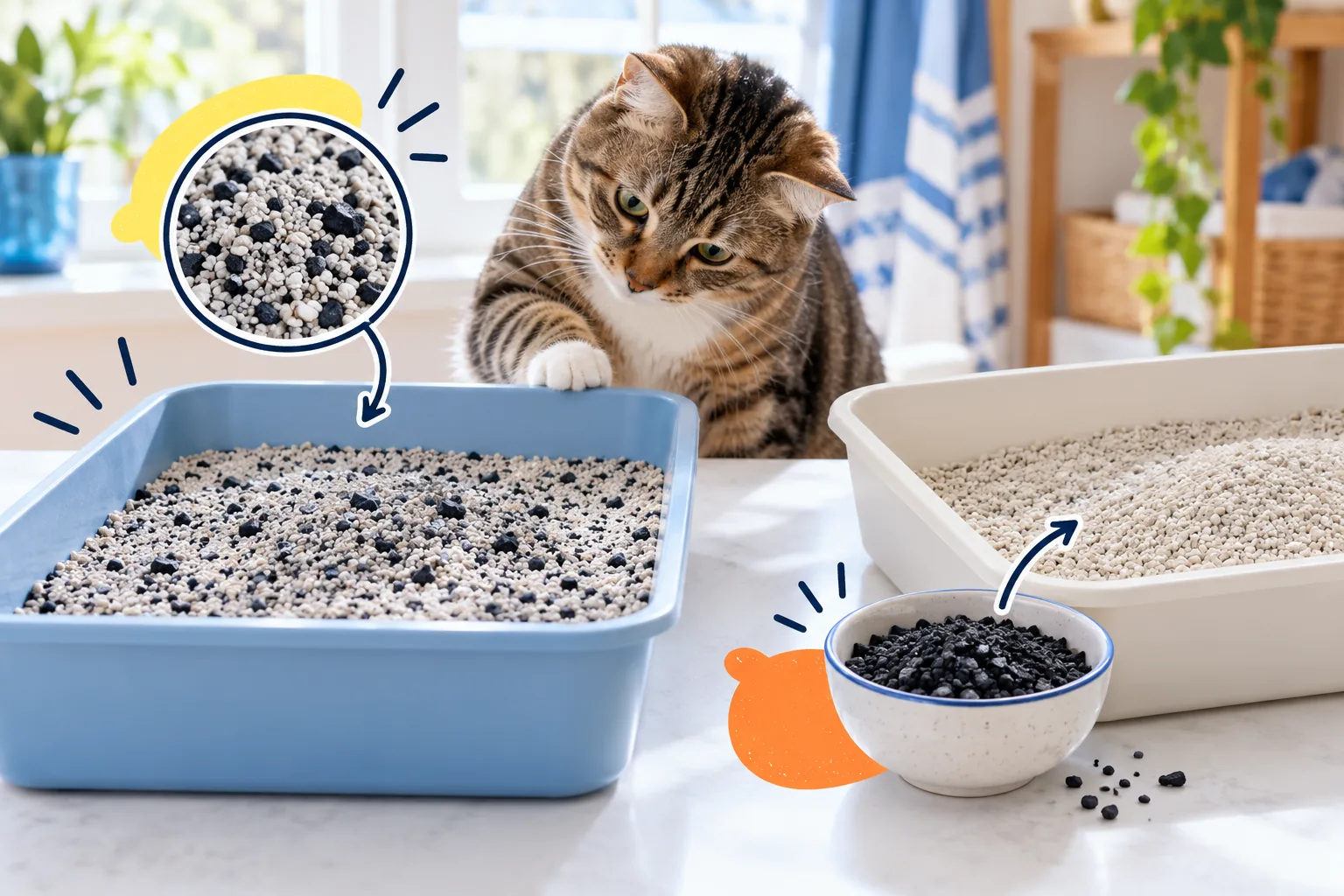
What activated charcoal is
Makers use more than one word for it. Tidy Cats' Free & Clean Unscented page says activated charcoal. Fresh Step's Simply Unscented page says enhanced carbon in a clumping clay litter. Purrify describes its product as activated carbon granules.
The US EPA describes adsorption as gas pollutants moving from air onto the solid surface of an adsorbent. Activated carbon is commonly used, and its capacity is finite. That describes the general mechanism, not any one product. This guide covers products a maker sells for use in or with cat litter, not household charcoal. Carbon inside a box's air filter is a different format, covered in the carbon filter guide.
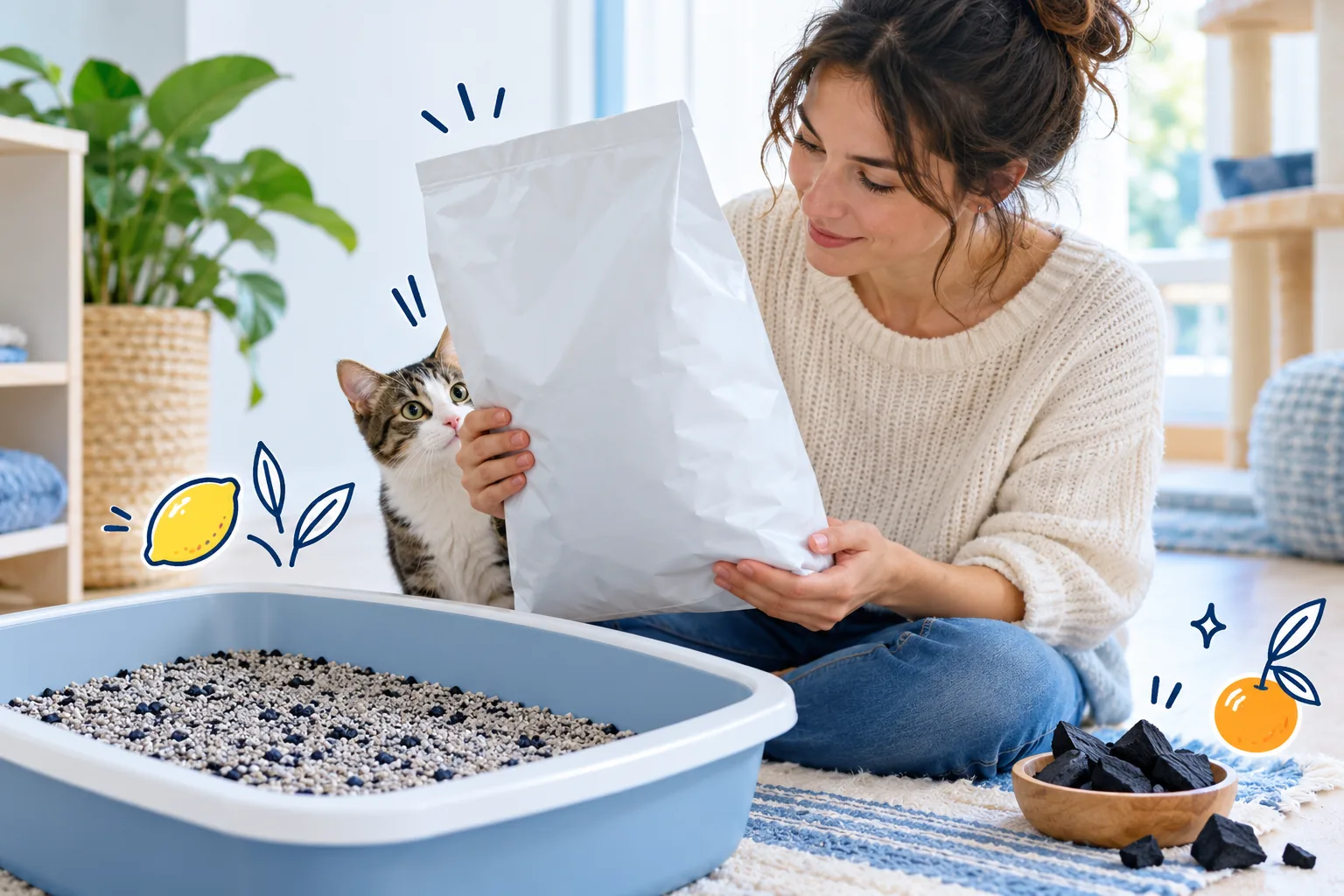
Charcoal in litter versus charcoal add-ins
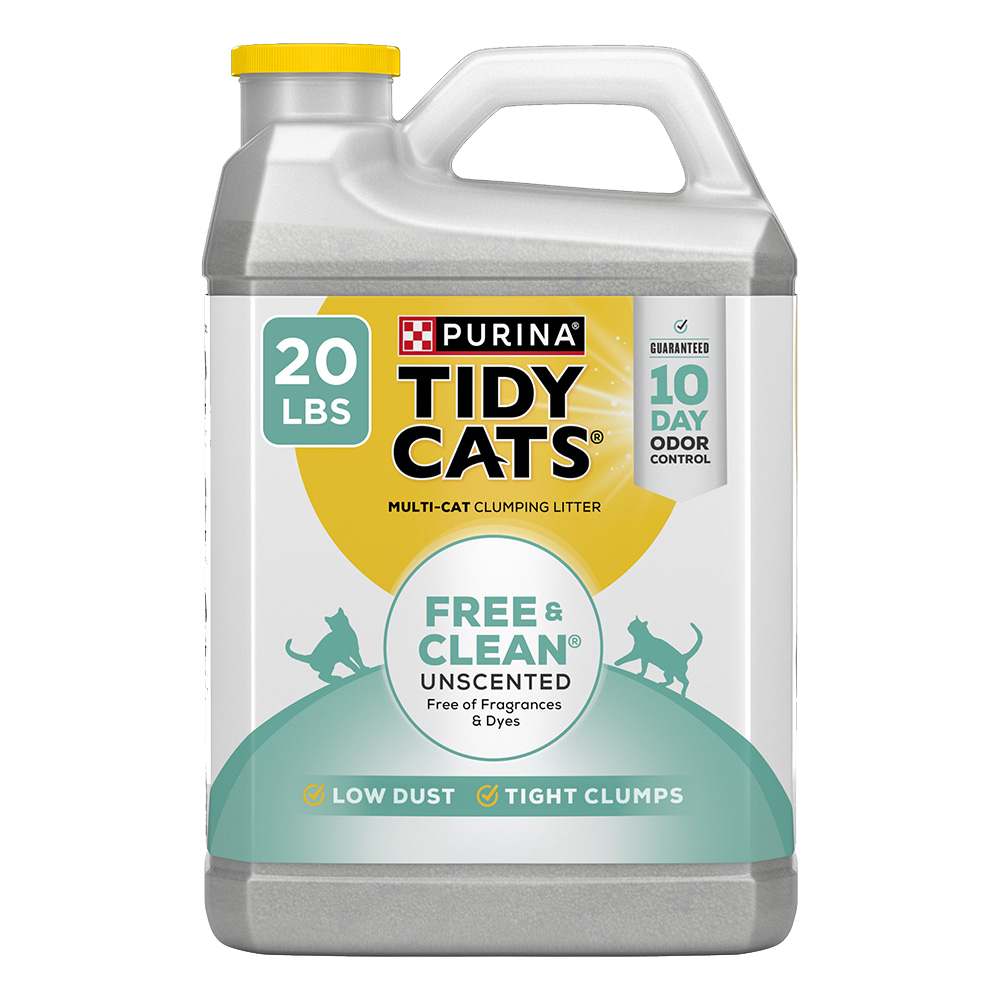
Charcoal built into litter means changing your litter. Tidy Cats describes Free & Clean Unscented as natural clay, multi-cat, clumping litter with activated charcoal, without fragrances or dyes. That description lists contents. Tidy Cats also advertises 10-day odor control for this litter, but its page shows no test conditions or independent test. If you are weighing charcoal against baking soda, the charcoal versus baking soda comparison sets out the label details side by side.
A separate add-in is added to the litter you already have. Purrify is activated carbon granules in bags. We suggest the 120g bag for most homes. The maker's directions read: "2 tablespoons of Purrify granules per litter box. Sprinkle on fresh litter, mix gently. Top up whenever the box starts giving off a smell again." It sets no fixed schedule. Check your litter maker's and box maker's guidance before adding granules.
Charcoal built into the litter or added separately
Activated charcoal reaches a litter box in one of two ways. It can be an ingredient the maker has already blended into the litter, or it can be a separate additive sold on its own and mixed or sprinkled into litter you already use, following that product's own directions. Tidy Cats Free & Clean Unscented belongs to the first group, since its maker lists clay and activated charcoal as the litter's materials, along with clumping and no fragrances or dyes. This page describes what the product contains according to its maker, checked on October 23, 2026, and makes no comparison of how either approach performs.
- Base material
- Clay, clumping
- Charcoal
- Activated charcoal listed as a built-in ingredient
- Fragrances and dyes
- None
Label checks before you buy
Words matter on a charcoal label. Tidy Cats says without fragrances. Fresh Step says no added fragrances. Either way, find out whether the charcoal is in the litter or in a separate bag.
Write the exact wording down for each product you consider. Side by side, the differences between charcoal in litter and a separate add-in are easier to see.
- Find charcoal or carbon in the product description or ingredients.
- Note whether it is the litter itself or a separate add-in.
- Read the fragrance wording exactly.
- Read the amount and timing in the maker's directions.

Questions to ask the maker or a vet
Ask the maker: what is in the product, what do the directions say for my litter and box, and what testing sits behind each claim, under what conditions? Tidy Cats' page, for one, lists contents and advertises 10-day odor control in its images, without showing test conditions, so ask what supports any odor claim.
A vet can speak to your cat in a way no page can. Cornell's guidance recommends a veterinary exam to look for underlying causes of house soiling. Ask whether any product suits a kitten, a senior or a cat with a health condition.
Quick questions
What are the maker's directions for Purrify granules?
Purrify's maker says 2 tablespoons of granules per litter box, sprinkled on fresh litter and mixed gently. Top up whenever the box smells again; it sets no fixed schedule. Check your litter and box maker's guidance first.
How does activated carbon work in general?
The US EPA describes adsorption as gas pollutants moving from air onto the solid surface of an adsorbent. Activated carbon is commonly used, and its capacity is finite. That is the general mechanism, not any one product.
Sources
Affiliate disclosure: this site may earn a commission if you buy through this link.